What All About Ticks is for
Written by Phillip George · Last updated: August 30, 2026
A plain-language reference on ticks and tick-borne disease in Canada and the United States, where every factual claim links to the health authority it came from.
The site is written and maintained by Phillip George, an independent researcher and writer. He is not a physician, a veterinarian, or an entomologist, and the site does not pretend otherwise. What he does is read the primary sources — the Centers for Disease Control and Prevention, the Public Health Agency of Canada, provincial and state health departments, university extension services, and peer-reviewed papers — and turn them into pages that answer a real question and cite the source next to the claim. How that works in practice is set out in the Editorial Policy.
What the site covers: how to remove an attached tick, which species live where and what each one transmits, seasonal activity, tick-borne diseases in people and in pets, prevention that has evidence behind it, yard and property control, and region-by-region risk for six Canadian provinces and five US states.
Start here
Pick the line that matches your situation rather than browsing by topic.
I just found a tick on me
Get it off first. CDC advises removing an attached tick as soon as possible rather than waiting to see a provider, using fine-tipped tweezers and steady, even pressure.
How to remove a tick safelyI was bitten and I'm worried about symptoms
Know which symptoms matter, how soon each illness typically appears, and which ones are a reason to seek care the same day.
Symptoms and timelines by illnessI want to avoid ticks this season
Repellents with evidence behind them, permethrin on clothing rather than skin, tick checks that find nymphs, and what the dryer actually kills.
Prevention that has evidence behind itI want to know the risk where I live
Which species are established in your province or state, when they are active, and which official surveillance map or service to check locally.
Risk by Canadian province Risk by US state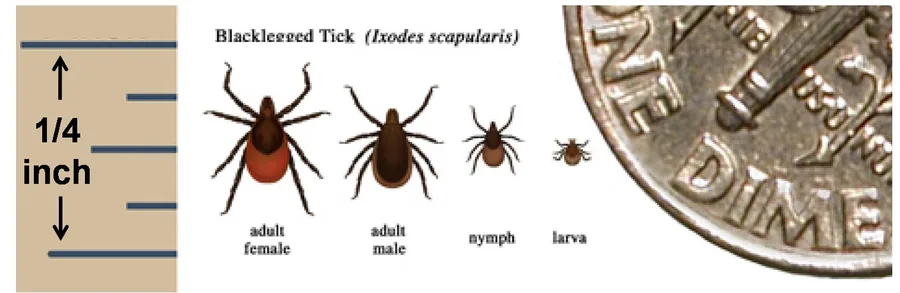
Tick Identification
Learn to identify different tick species, their characteristics, and distinguishing features. Essential knowledge for proper prevention and treatment.
Compare tick species side by sideImage: Wikimedia Commons (CDC, Public Domain)
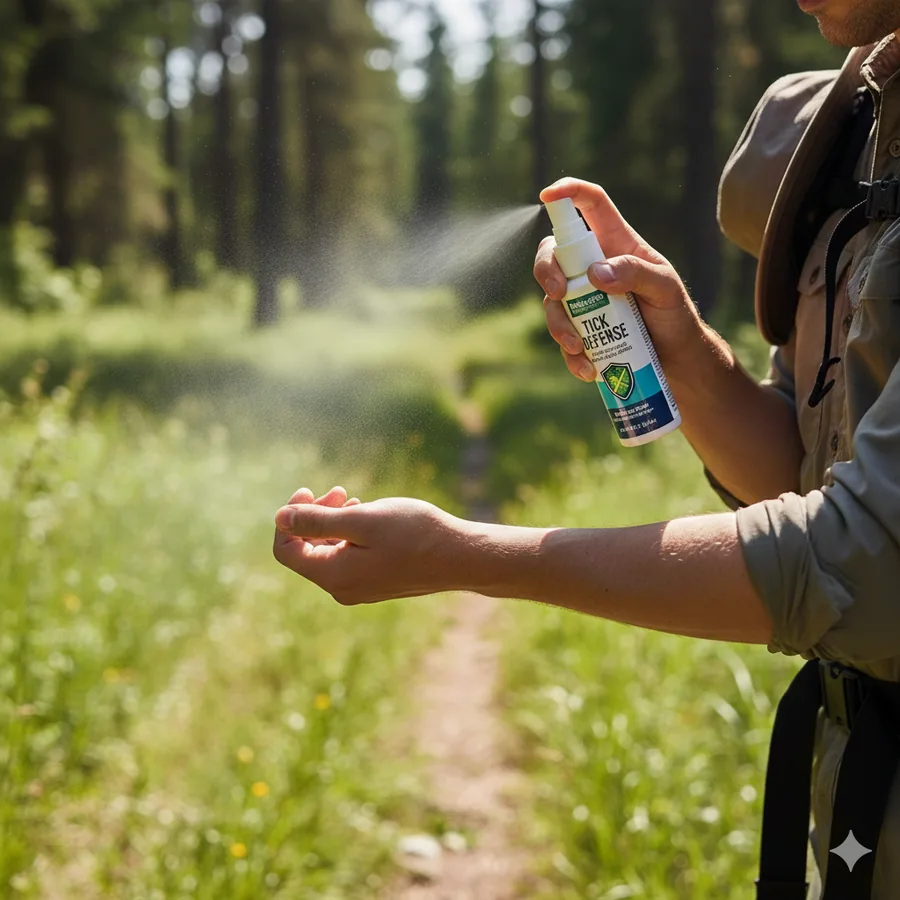
Prevention & Control
Comprehensive strategies for preventing tick bites and controlling tick populations in your environment. Protect yourself and your family.
Read the prevention guide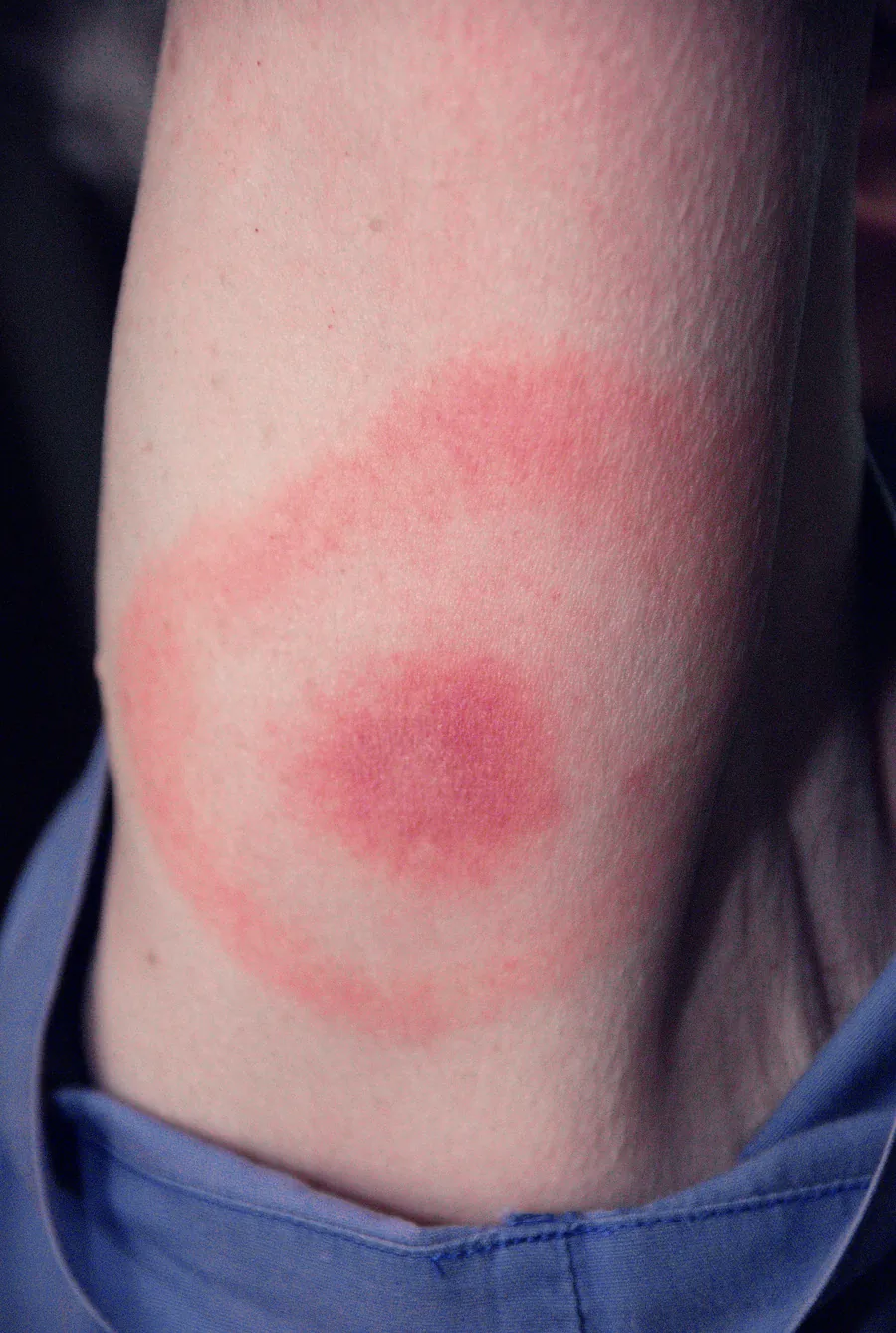
Diseases & Treatment
Understand tick-borne diseases, their symptoms, diagnosis, and treatment options. Early recognition is key to successful treatment.
Browse tick-borne diseasesBull's-eye rash - Image: Wikimedia Commons (CDC, Public Domain)
Why tick risk changes with place and season
Two questions decide most of what matters about a tick encounter: which species bit you, and when. Both answers change as you move across the map, which is why a single national answer is close to useless.
On timing, the CDC's position is that tick exposure can happen year-round but that ticks are most active during the warmer months, roughly April through September (CDC — Preventing tick bites). Blacklegged ticks stretch that window at both ends: adults can be out looking for a host any time winter temperatures rise above freezing (CDC — Where ticks live). Within the season the risk is not flat either. In the eastern United States, nymphs quest actively from April through July while adults peak in early spring and again in autumn, and the CDC singles out nymphs as the higher-risk stage because they are abundant and about the size of a poppy seed, which means people often never notice the bite (CDC — How Lyme disease spreads). On the prairies the vernacular shifts before the biology does: a Manitoban asking when woodtick season ends is usually asking about Dermacentor ticks, whose bite risk the CDC places in spring and summer.
On place, the pattern is not subtle. The CDC reports that most Lyme disease in the United States occurs in the Northeast, mid-Atlantic and upper Midwest, with some cases along the Pacific Coast, and that the share of blacklegged ticks carrying the bacterium ranges from none to more than half depending on the area and life stage. Blacklegged ticks in most of the southeastern United States are almost never infected. In Canada, the Public Health Agency of Canada recorded 5,809 Lyme disease cases in 2024 for a national incidence of 14.1 per 100,000, up from 11.9 the previous year, with Ontario, Nova Scotia and Québec accounting for roughly 95% of cases and Nova Scotia reporting the highest provincial incidence at 217 per 100,000 (PHAC — Tick-borne disease surveillance annual report). Read those year-over-year jumps carefully: PHAC itself notes that part of the recent rise reflects a change in how Nova Scotia defines a reportable case, not only more infections. This is exactly the kind of caveat a surveillance dashboard carries and a headline drops.
Why identifying the tick matters
Species is not trivia. Each tick carries its own set of pathogens, so the identification changes which symptoms are worth watching for and how urgent they are.
The blacklegged tick transmits the agents of Lyme disease, anaplasmosis, babesiosis, hard tick relapsing fever, one form of ehrlichiosis, and Powassan virus. The American dog tick transmits Rocky Mountain spotted fever and tularemia. The lone star tick transmits ehrlichiosis, Heartland virus, Bourbon virus and tularemia, is linked to the STARI rash, and is increasingly associated with alpha-gal syndrome. The Rocky Mountain wood tick, found in the Rockies and southwestern Canada between roughly 4,000 and 10,500 feet, transmits Rocky Mountain spotted fever, Colorado tick fever and tularemia (CDC — Where ticks live).
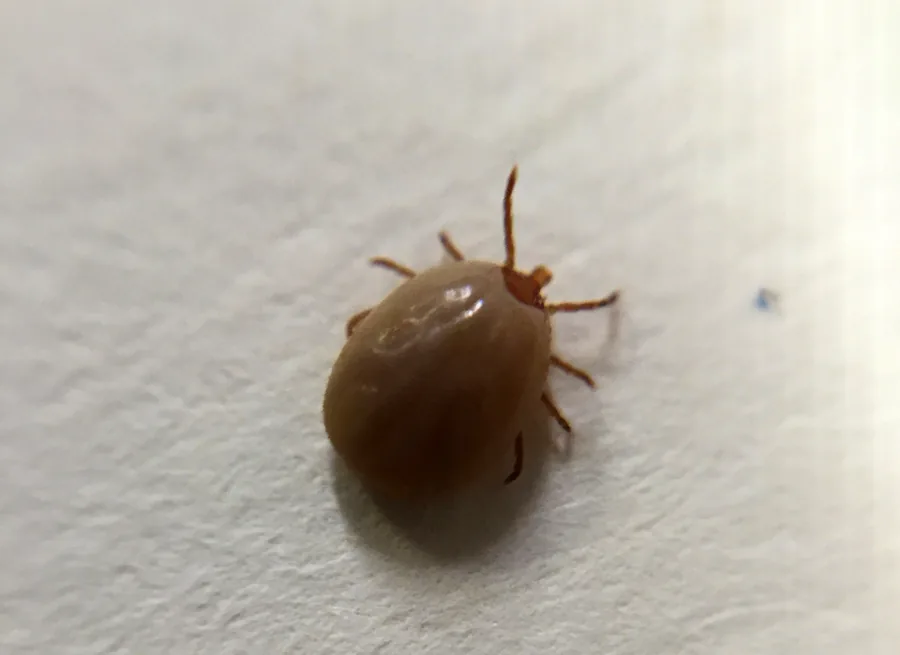
Engorged deer tick after feeding
Image: Wikimedia Commons (CC BY 2.0)
The negative version of that list is just as useful. Lone star ticks, American dog ticks, Rocky Mountain wood ticks and brown dog ticks cannot transmit Lyme disease bacteria at all (CDC — How Lyme disease spreads). If the tick on your ankle was a wood tick, Lyme is not the thing to worry about, and knowing that saves a great deal of anxiety. One caution the CDC attaches to its own distribution maps is worth repeating: a species being present in your region does not mean it transmits a given disease there, because transmission depends on more than tick presence.
Our identification guide and interactive identifier exist to help you narrow the possibilities from a good look at the tick. Neither replaces an expert. In Canada, eTick.ca returns a real identification from a photograph; in the United States, your state health department or land-grant extension service is the place to start.
The honest limits of a website
Three of the variables that determine risk after a bite are things no website can observe: how long the tick was attached, which species it was, and how common infection is in the ticks where you were standing. That is why our pages describe ranges and decision points rather than verdicts.
Attachment time is the clearest example of something worth knowing and impossible for us to know. The CDC states that in most cases a tick must be attached for more than 24 hours before the Lyme disease bacterium can be transmitted, and that removing it within 24 hours greatly reduces the chance of infection. Other pathogens can move faster, which is why prompt removal is the rule regardless of species. Whether a single preventive dose of doxycycline makes sense after a particular bite is a judgement for a clinician who knows the local risk, and the CDC frames it that way too (CDC — Preventing Lyme disease).
Guidance also moves. Case definitions get revised, species ranges expand, and agencies update their pages. Every substantive page here carries the date it was last reviewed and a link to the authority behind each claim, so that when the two disagree you can see which is newer and go with the agency. If you find something out of date or wrong, the Corrections Policy explains how to tell us and what we do about it.
Regional tick guides
Find official resources and region-specific context for ticks and tick-borne disease risk.
Canada (by province)
Province pages with PHAC + provincial public health resources.
Explore Canada guideTop questions
Sources: CDC — Preventing tick bites, CDC — Where ticks live.
Source: CDC — How Lyme disease spreads.
Source: CDC — What to do after a tick bite. Full walkthrough: tick removal guide.
Source: CDC — What to do after a tick bite.
Sources: CDC — How Lyme disease spreads, CDC — Where ticks live.
Sources: CDC — Preventing Lyme disease, PHAC — Tick-borne disease surveillance annual report.
Source: CDC — Preventing Lyme disease. See also tick control.
Latest tick news
Developments we have checked against a primary source. The full log explains what each one means and, just as importantly, what it does not.
· Maine
Maine confirms a fourth Powassan virus case of 2026
Powassan has no antibiotic treatment and can transmit within about 15 minutes of attachment, so the usual "remove it within a day" reassurance does not apply to it.
Read the Powassan entry· European Union
A Lyme disease vaccine enters European regulatory review
The first regulator to open a file on a human Lyme vaccine since LYMErix was withdrawn in 2002. Nothing is available to patients yet, in Europe or North America.
Read the vaccine entry· North Carolina
Southern Appalachian tick infection rates match the Northeast
CDC surveillance near Asheville found roughly 40% of adult blacklegged ticks carrying the Lyme bacterium. The clinical risk is a doctor not thinking to test for it.
Read the North Carolina entry· Nebraska
Heartland and Bourbon viruses found in Nebraska ticks
Neither virus has a commercial clinical test in the US, so the story is a diagnostic gap rather than a case count. No human infection has been diagnosed in the state.
Read the Nebraska entrySee the full tick news and surveillance log, updated monthly.
Sources and further reading
These are the authorities the site draws on. Where a page here disagrees with one of them, the agency is right and we want to hear about it.
Canada
- Public Health Agency of Canada — Lyme disease
- PHAC — Tick-borne disease surveillance annual report
- PHAC — Explore the surveillance data
- Public Health Ontario — Vector-Borne Disease Tool
- INSPQ — Lyme disease (Québec)
- BCCDC — Tick-borne diseases
- Province of Manitoba — Tick-borne diseases
- Nova Scotia — Lyme disease
US states and tick identification
Page last updated September 6, 2026. Site policies: Editorial Policy, Review Policy, Corrections Policy, Advertising Disclosure, Privacy Policy.